people
members of the HiACE Lab

Dr. Nade Liang is an Assistant Professor in the Department of Industrial, Manufacturing, and Systems Engineering at Texas Tech University. His research focuses on cognitive engineering in human-machine and human-automation interaction, behavioral and physiological sensing, human behavior modeling in intelligent transportation systems, and human-computer interaction design for diverse populations.
His current research centers on three areas: (1) eye-tracking and operator behavior-based modeling of task performance and decision-making; (2) quantitative human behavior encoding and prediction, with a focus on visual attention allocation and body posture; and (3) data-driven human-centered design, prototyping, and evaluation of human-machine and human-AI interfaces that support task performance and effective decision-making under physical, visual, and cognitive constraints. He also serves as Program Chair of the Perception and Performance Technical Group of the Human Factors and Ergonomics Society for the 2023–2025 term.
Education and Training
Ph.D., Industrial Engineering, Purdue University (2024)
M.S., Industrial Engineering, Purdue University (2019)
B.Eng., Transportation Science and Engineering, Beihang University (2017)
Links
Email · Google Scholar · LinkedIn · CV
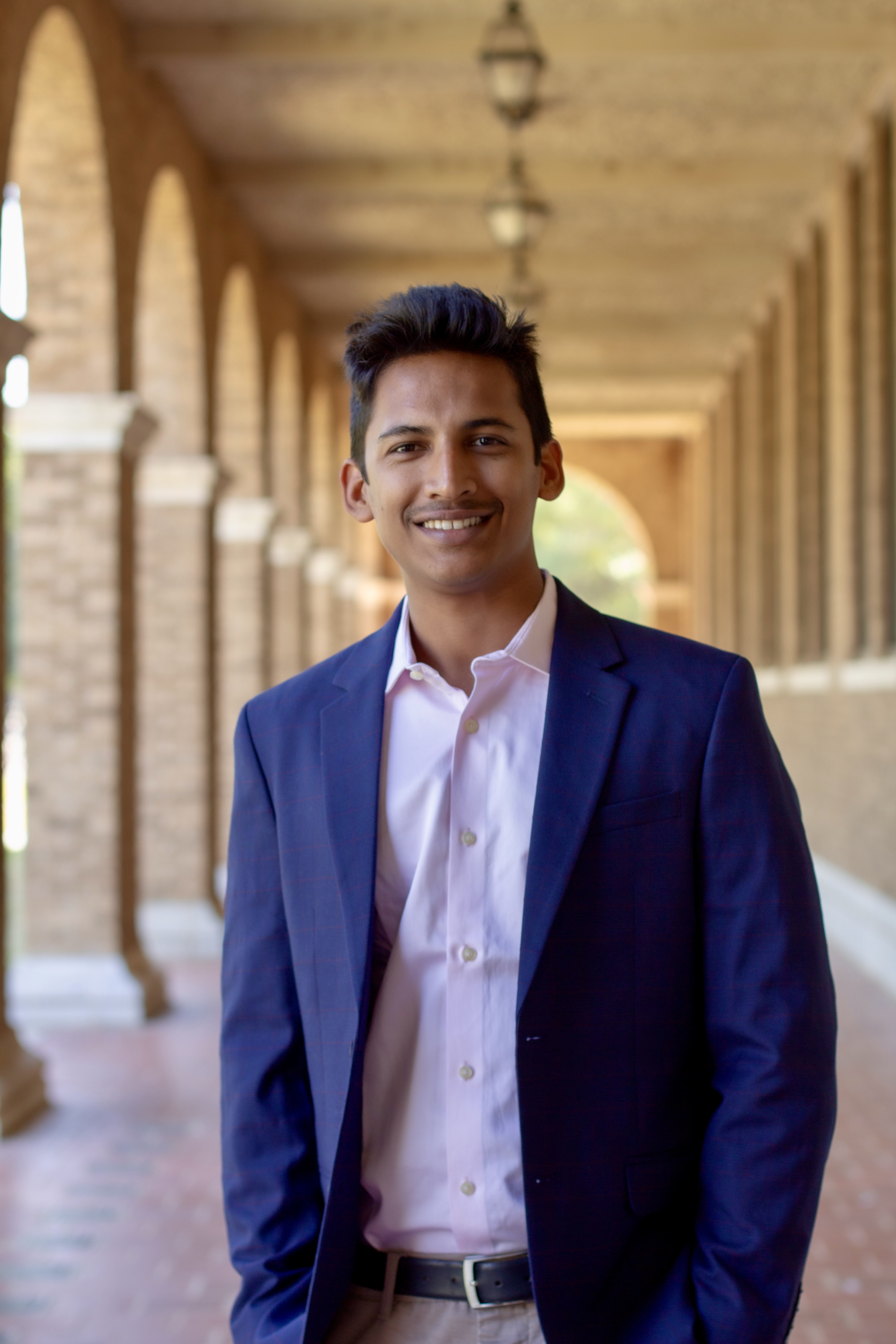
Kaiser Hamid is a PhD student at Texas Tech University. He received his undergraduate degree from the Bangladesh University of Engineering and Technology (BUET), where he developed a strong foundation in engineering and computational methods. His research interests include autonomous driving, computer vision, multimodal learning, and human-centered AI.
His current work focuses on vision-language-action models, driver attention modeling, interpretability, and robust evaluation of autonomous systems. He is particularly interested in developing autonomous driving systems that are not only high-performing, but also more understandable, reliable, and grounded in human-centered design.
Outside research, he enjoys driving, traveling, and exploring new places. These interests continue to shape his perspective on mobility, interaction, and intelligent transportation.

Peihang Li is a Ph.D. student in Industrial Engineering at Texas Tech University. He received his M.S. in Sustainable Urban Mobility Transitions from KTH Royal Institute of Technology and Eindhoven University of Technology in 2024, and his B.Eng. in Vehicle Engineering from South China University of Technology in 2020.
His research focuses on human factors in transportation safety, with particular interests in automated vehicles, driver behavior, risk perception, cognitive workload, and human-machine interface design. He uses methods such as eye-tracking, driving simulator experiments, and behavioral analysis to study how drivers interact with complex traffic environments and automated systems. He is also involved in research related to mild cognitive impairment (MCI), examining how cognitive changes may influence driving behavior and safety. His long-term goal is to contribute to safer and more human-centered transportation systems in both academia and the automotive industry.
Outside of research, he is passionate about nature and driving, and once completed a road trip from Stockholm, Sweden, to Tromsø, Norway, and back through the Arctic Circle.
Links
LinkedIn

Aninda Kumar Chowdhury is a PhD student in Industrial Engineering at Texas Tech University. His academic background combines engineering analysis, computational modeling, and numerical problem solving, with earlier training at the Bangladesh University of Engineering and Technology and graduate study at Rochester Institute of Technology.
His current preparation focuses on the cognitive side of human factors and the fine-tuning of vision-language models. He is also developing stronger familiarity with terminal-based workflows and high-performance computing resources for running large-scale code and experiments. More broadly, he is interested in how intelligent systems can be designed to support human understanding, decision-making, and reliable interaction.
Outside research, he enjoys playing flight simulator with real-time ATC, taking walks in nature, and learning the guitar.
Links
LinkedIn

Kayloni Hartsfield is an undergraduate researcher at Texas Tech University. Her research focuses on improving automated transportation safety for older adult drivers through data analytics and human-centered design. By working with existing grid-based datasets and incorporating individual traits and preferences, she aims to identify underlying patterns that can inform safer and more adaptive driving systems.
By combining data-driven insights with behavioral research, she studies how driving environments and system designs affect older adults. Through this work, she hopes to contribute to safer, more inclusive automated transportation systems that support independence, mobility, and confidence for aging populations.
Outside of research, she is passionate about using technology to help people succeed and about finding advances that can improve everyday life. In her free time, she enjoys playing video games and diamond painting as a creative outlet.
Links
LinkedIn